

Selling Belongings on Consignment: Questions Beyond the Commission
Compare consignment proposals and understand what happens to unsold belongings.
- 2 min read
- 4 clear steps
- Printable checklist
- Free PDF
By RealtyListingCo · Published October 24, 2026 · Reviewed October 24, 2026
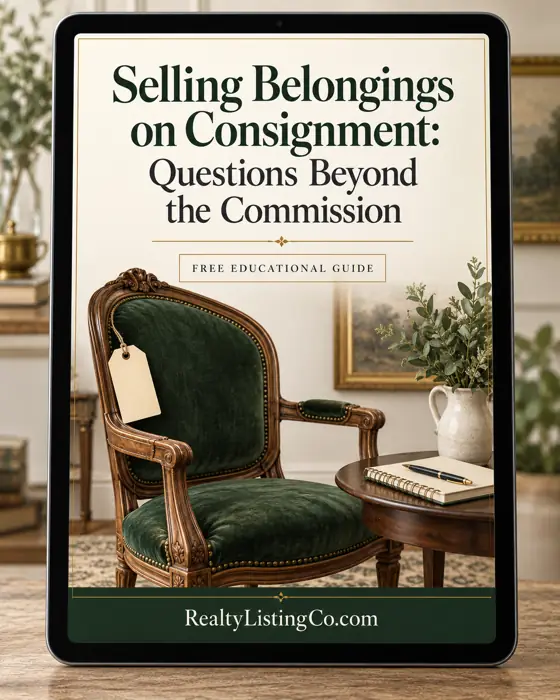
Compare consignment proposals and understand what happens to unsold belongings.
- Confirm the Items and Your AuthorityList the belongings you want to consign and photograph their condition.
- Request Every Type of ChargeAsk for commission, pickup, cleaning, storage and return charges that may apply.
- Understand the Unsold-Item ProcessRequest the sale period, markdown authority and deadline for collecting items that do not sell.
- Plan the Handoff and Follow-UpAgree on transport, the condition record, sales reporting and payment timing.
Selling Belongings on Consignment: Questions Beyond the Commission
Consignment can seem like a simple alternative to arranging individual sales, until fees, markdowns and unsold-item deadlines appear. Before handing over belongings, understand the entire process. The aim is a documented comparison, not a promise that every item will sell or recover its original purchase price.
§ 1 Step 1 of 4 Confirm the Items and Your Authority
List the belongings you want to consign and photograph their condition. Resolve ownership or family permission questions first. Ask whether the business accepts each type of item and how it identifies inventory. Keep a copy of the intake list so a general receipt does not become the only record of what left your home.
§ 2 Step 2 of 4 Request Every Type of Charge
Ask for commission, pickup, cleaning, storage and return charges that may apply. Ask how sale price changes affect the amount you receive. An estimated resale price is not cash already earned. Avoid comparing commission percentages alone when the services, timing or additional charges differ between businesses.
§ 3 Step 3 of 4 Understand the Unsold-Item Process
Request the sale period, markdown authority and deadline for collecting items that do not sell. Ask what happens if you miss that deadline. Find out whether donation, disposal or another outcome requires your permission under the proposed terms. Resolve unclear language before signing rather than relying on a casual assurance.
§ 4 Step 4 of 4 Plan the Handoff and Follow-Up
Agree on transport, the condition record, sales reporting and payment timing. Retain signed terms and an itemized receipt, then calendar the next reporting or collection date. The New York Attorney General’s historical consignment case illustrates payment and unsold-item disputes; it does not supply your contract terms. If a separate interstate household mover is involved, review its written scope using the relevant FMCSA resources.
A Practical Example
A shop quotes a commission but also charges pickup and storage. Record each charge separately and ask when storage starts before estimating what you might receive.
Illustrative example, not a case history or a recommended legal outcome.
When to get help
This is not an appraisal or a guarantee of sale value. Obtain written terms and professional advice where ownership, tax or contract questions arise.
Your Next Steps
One thing to do today: Inventory the items you are authorized to consign and photograph their condition.
Ticks stay on this page while you read. Print to keep a copy.
One thing to do today: Inventory the items you are authorized to consign and photograph their condition.
Appendix B · Sources & further reading
- New York Attorney General — Consignment Payment and Return Dispute (2019 historical example). . ag.ny.gov
- FMCSA — Moving Checklist (Interstate Household Goods). . www.fmcsa.dot.gov
Sources last reviewed October 24, 2026
Your next step depends on your situation
Keep this guide for when you need it
Download a printable copy to keep with your papers or share with family. No purchase required, and you can keep reading without giving an email.
- All 4 steps in a printable layout
- The first-step checklist
- Sources and the professional-advice disclaimer
Downsizing Cost & Savings Calculator
Explore an illustrative estimate alongside the questions in this guide.
More Downsizing & Moving guides All Downsizing & Moving guides →
Where to Start When Downsizing Feels Overwhelming
Read the guide →Keep, Sell, Donate or Gift When Belongings Stall the Move
Choose a practical next destination for belongings while respecting ownership, emotional meaning and the time you actually have.
Read the guide →When One Person Is Doing All the Downsizing Work
Turn vague offers to help into clear tasks, spending questions and short check-ins without taking decisions away from the homeowner.
Read the guide →Avoid Budget Surprises When Moving to a Smaller Home
Check destination fit, compare the same moving scope and separate one-time costs from ongoing housing expenses.
Read the guide →How to Start a Downsizing Conversation With a Parent
Prepare a respectful conversation about housing needs while preserving the homeowner’s voice and choices.
Read the guide →Will Your Furniture Fit the Smaller Home—and Your Daily Life?
Make a room-by-room fit plan before paying to move furniture that may not work in the new space.
Read the guide →Put the guide into practice Explore Downsizing & Moving resources →
A note on professional advice. This guide is general education, not legal, financial or tax advice. Requirements vary by jurisdiction, documents and individual circumstances. Consult appropriately qualified local professionals before consequential decisions or signatures. This is not medical, insurance or accessibility advice. Ask qualified professionals about contracts, health and safety needs. Interstate household-goods resources do not establish requirements for every local move or specialized transport. Respect ownership, permission, privacy and individual preferences. Read our full Educational Disclaimer.
The Reading Room · RealtyListingCo · Free educational guides