

How to Start a Downsizing Conversation With a Parent
Prepare a respectful conversation about housing needs while preserving the homeowner’s voice and choices.
- 2 min read
- 4 clear steps
- Printable checklist
- Free PDF
By RealtyListingCo · Published October 12, 2026 · Reviewed October 12, 2026
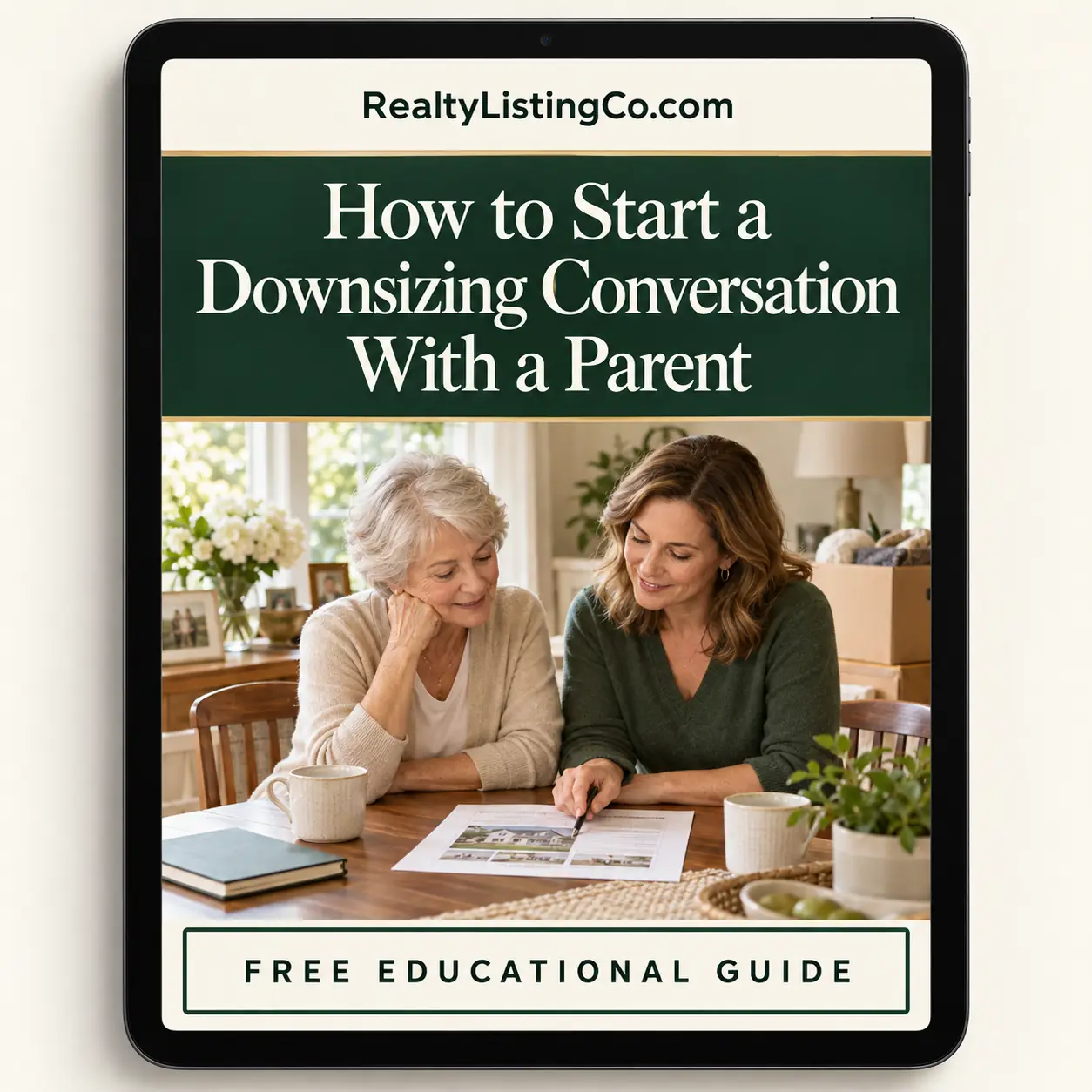
Understand what matters to the homeowner and agree on one useful information-gathering step.
- Ask Permission to Discuss One ConcernChoose a calm time and use a specific observation: the yard work seems tiring, or a room is rarely used.
- Identify What Must Be PreservedAsk about daily routines, pets, visitors, privacy, community ties and the possessions that matter most.
- Compare More Than One PossibilityConsider gathering information about staying with suitable support, adapting the current home or exploring a different home.
- Agree on a Small Next StepPossible steps include viewing one property together, obtaining a maintenance estimate or asking an occupational therapist about daily-use difficulties.
Family Concern Meets Resistance
You see a difficult staircase or mounting maintenance work. Your parent hears a proposal to give up independence, familiar neighbors and treasured routines. When the conversation begins with a predetermined moving date, both sides can feel unheard.
§ 1 Step 1 of 4Ask Permission to Discuss One Concern
Choose a calm time and use a specific observation: the yard work seems tiring, or a room is rarely used. Ask how the person feels about it. Avoid treating age, disagreement or a cluttered room as proof that someone cannot make decisions. Do not turn the first discussion into a family vote.
§ 2 Step 2 of 4Identify What Must Be Preserved
Ask about daily routines, pets, visitors, privacy, community ties and the possessions that matter most. Write down the homeowner’s priorities in their own words. A smaller property that disrupts every valued activity may solve one problem while creating several others.
§ 3 Step 3 of 4Compare More Than One Possibility
Consider gathering information about staying with suitable support, adapting the current home or exploring a different home. The National Institute on Aging discusses planning ahead for aging in place. Use qualified professionals to assess accessibility or care needs rather than diagnosing those needs through a family checklist.
§ 4 Step 4 of 4Agree on a Small Next Step
Possible steps include viewing one property together, obtaining a maintenance estimate or asking an occupational therapist about daily-use difficulties. Let the homeowner help choose the step and timing. Offer practical help without removing possessions, arranging a listing or signing anything without proper authorization.
A Practical Example
An adult child proposes touring three apartments. The parent explains that gardening and weekly visits are priorities. They first compare how those activities could continue in different settings, then agree to one visit with no commitment to move.
Illustrative example, not a case history or a recommended legal outcome.
When to get help
For concerns about decision-making ability, coercion or financial exploitation, consult appropriate health, legal or safeguarding professionals. A family relationship alone does not establish authority over another adult’s property.
Before the Conversation
One thing to do today: Ask which part of maintaining the home feels most difficult and which part of living there matters most.
Ticks stay on this page while you read. Print to keep a copy.
One thing to do today: Ask which part of maintaining the home feels most difficult and which part of living there matters most.
Appendix B · Sources & further reading
- National Institute on Aging — Aging in Place. . www.nia.nih.gov
- CFPB — Planning for Diminished Capacity and Illness. . www.consumerfinance.gov
Sources last reviewed October 12, 2026
Your next step depends on your situation
Keep this guide for when you need it
Download a printable copy to keep with your papers or share with family. No purchase required, and you can keep reading without giving an email.
- All 4 steps in a printable layout
- The first-step checklist
- Sources and the professional-advice disclaimer
Downsizing Cost & Savings Calculator
Explore an illustrative estimate alongside the questions in this guide.
More Downsizing & Moving guides All Downsizing & Moving guides →
Where to Start When Downsizing Feels Overwhelming
Read the guide →Keep, Sell, Donate or Gift When Belongings Stall the Move
Choose a practical next destination for belongings while respecting ownership, emotional meaning and the time you actually have.
Read the guide →When One Person Is Doing All the Downsizing Work
Turn vague offers to help into clear tasks, spending questions and short check-ins without taking decisions away from the homeowner.
Read the guide →Avoid Budget Surprises When Moving to a Smaller Home
Check destination fit, compare the same moving scope and separate one-time costs from ongoing housing expenses.
Read the guide →Will Your Furniture Fit the Smaller Home—and Your Daily Life?
Make a room-by-room fit plan before paying to move furniture that may not work in the new space.
Read the guide →Put the guide into practice Explore Downsizing & Moving resources →
A note on professional advice. Real estate laws, property ownership and title requirements, and tax implications vary significantly by state, county and municipality. These educational materials provide a general framework for discussion and preparation only; they do not constitute legal, financial or tax advice. Before signing agreements, transferring property or making decisions with legal, financial or tax consequences, consult appropriately qualified professionals in the jurisdiction where the property is located. Read our full Educational Disclaimer.
The Reading Room · RealtyListingCo · Free educational guides