

Unmarried Co-Owners: What to Gather When One Person Wants Out
Prepare ownership, loan and expense questions before discussing an exit from an unmarried co-ownership arrangement.
- 2 min read
- 4 clear steps
- Printable checklist
- Free PDF
By RealtyListingCo · Published October 23, 2026 · Reviewed October 23, 2026

Prepare a factual discussion packet for your own local attorney and lender before making commitments.
- Gather the Documents Before Choosing an OutcomeCollect available deeds, loan records, any co-ownership agreement and relevant purchase paperwork.
- Keep Contributions as Records, Not ConclusionsOrganize evidence of deposits, loan payments, repairs and other contributions with dates and supporting documents.
- Compare the Questions Behind Each OptionFor a possible sale, ask about authority, costs, obligations and proceeds.
- Address the Mortgage SeparatelyCFPB guidance explains that signing over ownership does not itself remove joint mortgage responsibility.
A Shared Home Outlasts the Relationship
One owner wants to move and the other wants to stay. Both remember the original financial arrangement differently. Advice about divorce may not fit, and moving out does not by itself resolve title, loan obligations or the value of either person’s interest.
§ 1 Step 1 of 4Gather the Documents Before Choosing an Outcome
Collect available deeds, loan records, any co-ownership agreement and relevant purchase paperwork. Ask counsel how the documents and local law affect your situation. Do not infer an equal share, a right to force a particular outcome or a reimbursement entitlement from a general article.
§ 2 Step 2 of 4Keep Contributions as Records, Not Conclusions
Organize evidence of deposits, loan payments, repairs and other contributions with dates and supporting documents. Separate agreed facts from disputed amounts. The log helps a professional review the history; it does not determine how money must be divided or convert every payment into ownership.
§ 3 Step 3 of 4Compare the Questions Behind Each Option
For a possible sale, ask about authority, costs, obligations and proceeds. For one owner keeping the home, ask about valuation, funding and lender requirements. For continued shared ownership, ask counsel about responsibilities, risks and future decision points. Treat all options as provisional until properly reviewed.
§ 4 Step 4 of 4Address the Mortgage Separately
CFPB guidance explains that signing over ownership does not itself remove joint mortgage responsibility. Ask the lender which options are actually available and what would establish a borrower’s release, if applicable. Avoid promising a transfer or payout before the legal and financing steps are coordinated.
A Practical Example
Two unmarried owners disagree about how an initial deposit should affect a future sale. They preserve the purchase records and contribution evidence, then obtain independent legal guidance instead of deciding that a spreadsheet establishes the answer.
Illustrative example, not a case history or a recommended legal outcome.
When to get help
Obtain your own qualified local legal and tax advice, especially if communication is pressured or ownership is disputed. Use professional support when direct discussions are unsafe. Unmarried co-owners should not assume divorce procedures or protections apply.
Your Co-Ownership Exit Packet
One thing to do today: Locate the existing co-ownership agreement, if any, and make a list of questions it leaves unanswered.
Ticks stay on this page while you read. Print to keep a copy.
One thing to do today: Locate the existing co-ownership agreement, if any, and make a list of questions it leaves unanswered.
Appendix B · Sources & further reading
- CFPB — Debts After Divorce. . www.consumerfinance.gov
- NAIC — Title Insurance and Public Record Searches. . content.naic.org
Sources last reviewed October 23, 2026
Your next step depends on your situation
Keep this guide for when you need it
Download a printable copy to keep with your papers or share with family. No purchase required, and you can keep reading without giving an email.
- All 4 steps in a printable layout
- The first-step checklist
- Sources and the professional-advice disclaimer
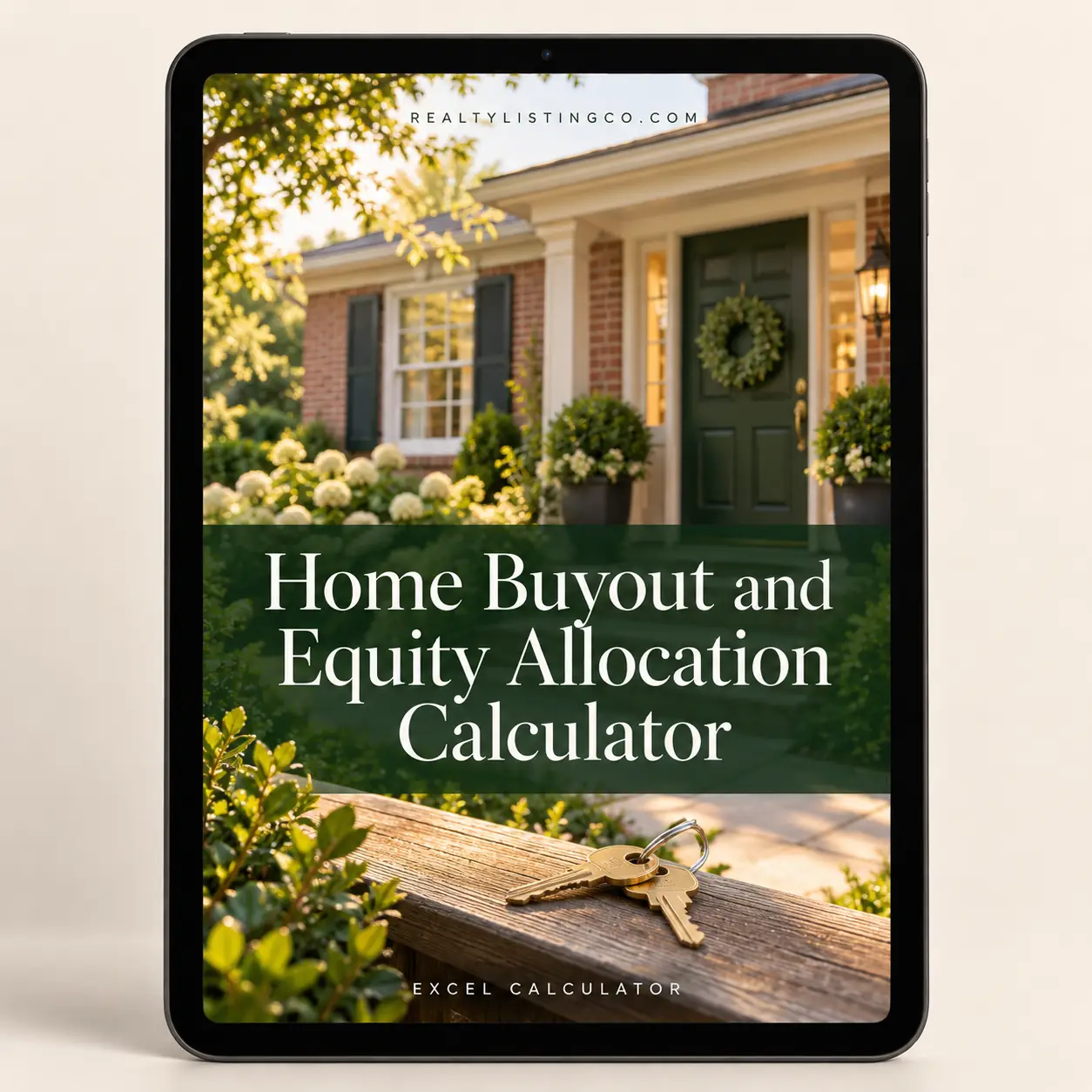
Divorce House Buyout Calculator
Explore an illustrative estimate alongside the questions in this guide.
More Divorce & Co-Owned Homes guides All Divorce & Co-Owned Homes guides →
Organize the Facts Before Deciding What Happens to a Shared Home
Read the guide →Leaving the Home or the Deed Does Not Settle the Mortgage Question
Keep title, loan liability, occupancy and court or private arrangements in separate records before making a property decision.
Read the guide →Track Shared Home Bills While the Long-Term Decision Is Unsettled
Make expenses, receipts and approval questions visible without assuming an equal split or automatic reimbursement.
Read the guide →Before Promising a Home Buyout, Check What Is Actually Possible
Prepare valuation, funding and ongoing-cost questions before either owner relies on a proposed buyout.
Read the guide →Coordinating a Shared-Home Sale When Communication Is Difficult
Prepare an operational question list for a shared-home sale, with legal authority and safety handled separately.
Read the guide →Put the guide into practice Explore Divorce & Co-Owned Homes resources →
A note on professional advice. This guide is general education, not legal, financial or tax advice. Requirements vary by jurisdiction, documents and individual circumstances. Consult appropriately qualified local professionals before consequential decisions or signatures. Title, loan liability, occupancy and property division are separate questions, including for unmarried co-owners. Records do not establish ownership shares, reimbursement entitlements or authority to act. Follow applicable court orders and obtain independent local legal, lender and tax advice. Use safe professional communication when direct contact is inappropriate. This is not lending or mediation advice. Read our full Educational Disclaimer.
The Reading Room · RealtyListingCo · Free educational guides